Showing posts with label Robin Taylor. Show all posts

19 January 2011

CD REVIEW: Robin Taylor - Two-Pack Part 1 (2010 Marvel of Beauty Records)


I’ve covered Danish multi-instrumentalist Robin Taylor quite a few times here on BPB…mostly because he’s so bloody prolific!  Every time I turn around he has a new album or project under way…it can get pretty exhausting keeping up with him.

Robin’s newest release is a 2-disc set titled Two-Pack, interestingly enough.  More interesting is the fact that each disc features very different line ups and styles, is packaged individually in little sleeves, and is smaller than your average CD…they’re both mini-CDs, EPs really, with about 22 minutes of music on each.

Today we’ll be listening to and looking at the first disc in the set.

Disc 1 features Robin Taylor teamed up with Jacob Mygind or Carsten Sindvald on sax.  Taylor handles all the guitars and basses, while monster drummer Klaus Thrane keeps the beat.  Louise Nipper adds voice on one track, continuing a collaboration that stretches back years.

Things open up with the appropriately titled ‘Heavy Friends.’  A wall of individual almost skronking instruments sets things off on a very wild and improvisational footing, sounding as much like the conclusion of a piece as an opener.  The song grooves heavily, with sax bleating over a pounding, insistent rhythm.  Taylor’s bass and guitar mesh very well together, and it’s a bit difficult to take the very structured style in the context of a TFU release, since I associate that moniker with Taylor’s more improvisational side.  This is a heck of an opening track, however, heavy as the title implies and with a lot of meat on its bones.  It feels far grander than its relatively short length would imply.

‘The Ghost of Goran’ carries things on, and at nearly 10 minutes is one of Taylor’s longest tracks on any of his releases (that I currently own, anyway).  It’s much more laid back, with Sindvald’s sax the major vocal point.  His soprano sax playing is lyrical and beautiful, while his tenor playing offers up similar fluidness.  The opening 4+ minutes are subtle and ballad-like, but the song quickly builds in intensity after Sindvald switches to tenor.  Suddenly we’re listening to a piece every bit as intense and heavy as opener ‘Heavy Friends,’ and while I’d like to come up with comparisons for you, there just aren’t any.  The music is individual, sounding really like no other band, and it’s all the stronger for it.

This first disc closes up with another shorter piece, the 7-minute ‘Stoned Mushroom.’  Slightly jazzier, Taylor’s keyboards lay down some nice foundations for his guitar and bass playing, with Mygind’s tenor sax sounding boozy and sleazy over top.  This is the kind of song I could hear being played in a rock and jazz club, smoke leaving a haze as the band hits the groove and takes it as far as they can go.  While definitely a rock song, there’s enough jazz in here to add flavour and spice to the mix.  A breakdown at 4:30 leads to a sort of coda of the main theme…the false stop is a nice touch, lending a faux bonus track feel to the coda.

While you can’t buy this CD on its own, it serves as a nice taste of this particular line up, and meshes well with the second half of Two-Pack, which we’ll be taking a look at very soon!

Track Listing:
Heavy Friends 5:13
The Ghost of Goran 9:56
Stoned Mushroom 7:19


Musicians:
Robin Taylor – electric guitar, keyboards, basses, percussion
Jacob Mygind – tenor sax (1, 3)
Carsten Sindvald – soprano and tenor sax (2)
Klaus Thrane – drums
Louise Nipper – voice (2)

19 August 2010

New double mini CD set, Two-Pack, by Robin Taylor/Taylor's Free Universe

This fall Marvel of Beauty will release a set of mini CDs; one containing brand new music from Robin Taylor; the other containing the very last studio recordings made by TFU (in February 2006).

The Robin Taylor disc features Taylor on electric guitars, bass and keyboards, Jakob Mygind on saxes, and Klaus Thrane on drums. Recorded at Soundscape and Thrane Studios.


The TFU disc features Taylor on electric guitar, Karsten Vogel on saxes, Pierre Tassone on processed violin, Assi Roar on bass, and Rasmus Grosell on drums. Recorded at Oyster Song Recording.


Both CDs will be mastered by Udi Koomran, and the total playing time will reach the limit of a good old fashioned vinyl LP.


For more details:
marvelofbeauty@hotmail.com

23 December 2009

CD REVIEW: Taylor's Universe, Artificial Joy


Our last review of 2009 is the newest release from Denmark’s Robin Taylor. Artificial Joy is the latest release from his group Taylor’s Universe.


If you’ve read any of my posts/reviews in the past, you know that I have covered a lot of Robin’s releases. The man is nothing if not prolific, but the more impressive part for me is that his releases are so consistent. After the course of fifteen or so albums I have listened to, I can’t say that I have found a naff one in the bunch. Certainly there are ones that don’t hit quite as hard, but in general, his compositions are always strong, and his choice of players is always spot on.


Taylor’s Universe albums tend toward the more tightly composed side of things, and this album is no different. The 7 tracks selected for this release, spread across a nice, compact 45 minutes, are all incredibly tightly written, polished and arranged. Generally speaking, the pieces are fairly bright and upbeat, but some changes of pace and sound throughout keep things from becoming too bland. As one would perhaps expect, there are even a few nods to the edgier, more angular Crimson side of things sprinkled about…I have to admit that these angry, edgy moments are some of my favourites.


“Atmosfear” is typical of the brighter side of Taylor’s composing. We’ve got some januty sax playing, a circus like organ line, and some very tasty guitar playing courtesy of Michael Denner (who has been working with Taylor for a bit now). While I did at first miss the contributions of Karsten Vogel when he and Taylor went in different directions, I am finding that Jacob Mygind’s playing throughout makes me miss Vogel a good bit less. Carsten Sindvald adds some nice clarinet playing as well, and all of this is wrapped up in a composition that never overstays its welcome, yet feels far more brief than its 7:04 timing indicates.


“Laughter,” on the other hand, is a far different monster. Featuring spoken vocals from Louise Nipper, the piece is one that seems born of the seeds planted by a song like King Crimson’s “Thela Hun Ginjeet.” A strange, somewhat disturbing story of a woman making a 911 call to report an accident, only to be subjected to gales of insane laughter, the music and words fit together perfectly, with a disconcerting vibe felt throughout. I keep coming back to this track, peeling away layers upon layers of sound, and still haven’t come close to feeling I’ve gotten to the bottom of it yet.


“Fame,” at 9:44, is the longest track on Artifical Joy, and it has been selected to close out the release. I feel at times that this song is the kitchen sink piece on the album (as in, everything including the kitchen sink), as just about everything I have ever heard in Taylor’s oeuvre is on display here. We’ve got some heavy guitar playing, tight, bottomless grooves, and playing that is both light and dark, heavy and soft. The ride out, which again evokes Crimson at its heaviest in1973, cuts off abruptly, leaving the listener hanging breathlessly, bereft of climax or conclusion. It’s a slightly risky take, in my opinion, but it pays off. The sudden shifts in mood and playing never feel forced, either…there’s no intentional attempts to be complex and avant here; it all seems natural and unforced.


I’ve selected these three tracks, rather than reviewing track by track, because I think they are the most exemplary on the release. I don’t want to overlook the other fine compositions on Artifical Joy; each is excellent, and more than worthy of repeated listens (as I can attest, as I’ve spent a good bit of the past week or so living with this album, trying to take in as much of it as possible). Robin Taylor’s been on a bit of a tear in 2009, with three different albums (See my review of Isle of Black from 10 March and Return to Whatever from 23 June), and if Artificial Joy is any indicator, 2010 should be an interesting one indeed for Mr. Taylor.


Work (4:41)

Artificial Joy (4:25)

Days Run Like Horses (7:02)

Atmosfear (7:04)

Laughter (7:01)

Telephone (4:59)

Fame (9:44)


Jakob Mygind: saxophones

Carsten Sindvald: clarinet/saxophone

Finn Olafsson: electric guitar

Michael Denner electric guitar

Robin Taylor: vintage keyboards, electric guitar, percussion

Flemming Muus Tranberg: fretless bass

Klaus Thrane: drums

Louise Nipper: voice

18 November 2009

Coming soon to a BPB near you...

Reviews:
The Tangent

Shadow Gallery

Redemption

Makajodama

Neal Morse

Magma

Bosch

Robin Taylor

The Red Masque


General looks/not quite reviews:

Blackfield

Porcupine Tree

The Pineapple Thief


Interviews:

Who knows?


You have all been very patient. More patient that perhaps deserved. It is appreciated, even when I haven't quite been able to say so.

24 August 2009

Taylor's Universe news

Highly acclaimed Danish prog act Taylor's Universe have spent most of this year in the studios, recording what will become the band's 10th album. The title of the album is Artificial Joy, and according to the band's leader/composer Robin Taylor, this release will contain some of his most inspired music heard in several years. Newcomers among the players are guitar ace Finn Olafsson (from legendary 60s/70s group Ache) as well as saxophone wizard Jakob Mygind.

Line-up for Artificial Joy:

Jakob Mygind saxophones

Carsten Sindvald clarinet/saxophone

Finn Olafsson electric guitar

Michael Denner electric guitar

Robin Taylor vintage keyboards, electric guitar, percussion

Flemming Muus Tranberg fretless bass

Klaus Thrane drums


with

Louise Nipper voice


Time of release: Later this fall (if nothing goes wrong).

23 June 2009

CD REVIEW: Taylor's Universe, Return to Whatever (MALS, 2009)


Return to Whatever is the newest release from Taylor’s Universe, the somewhat more composed ensemble led by Danish multi-instrumentalist Robin Taylor. On this new release he is joined by a fairly familiar group of musicians, including Michael Denner (Mercyful Fate, King Diamond), with whom Taylor has collaborated several times now, including the excellent Soundwall release from 2007. Also present on Return to Whatever are Pierre Tassone on violin, Carsten Sindvald on saxes, Flemming Muus Tranberg on bass, and Klaus Thrane on drums.


The album opens with the propulsive “Mooncake.” I love the bass and keyboard lines that really drive this song forward. It’s not exceptionally jaunty or fast, but the track percolates along and it’s easy to get swept up in it and go along for the ride. This is a solid opening track that really sets the stage for the music to follow. Speaking of following, “July 6th” is the track that follows, and it opens quietly and gently, with a pulsing bass note and some fragile piano playing courtesy, one assumes, of Mr. Taylor. Some scattered percussion and sustained guitar lines here and there build from moment to moment, slowly becoming a constant rhythm and presence. The tension builds slowly on this piece, and the presence of Celtic harp courtesy of guest Tine Elliot adds nicely to the sound.

Things pick up on “Haunted Yellow House,” as the band plays with heat and passion, Sindvald’s saxophones wailing with unrestrained fire. I absolutely love the opening section of the piece, and while perhaps I’d have liked it to go on longer, it may have lost its intensity had it done so. Tassone gets a chance to shine in the spotlight on this track as well, and his contributions are perfect. A more ambient bit about 2-3 minutes in really helps evoke the haunted theme mentioned in the title. “The Atlas Clock” is a bit more jaunty, with some pleasant flute playing courtesy of Lilholt, and a tick-tock clock like rhythm that gets the body swaying a bit. Add in a bit of crunchy guitar to keep things interesting and simmer for a bit, and you have a nicely diverse summer song to tempt and satisfy your music-loving taste buds.


Things get ramped back down several notches on the opening to “Earth,” with piano and flute leading in the track. It doesn’t remain thus for long, as a driving beat and some excellent organ playing kick in to get the track moving forward. With this section being mostly bass/drums/keys (with a touch of guitar in the background), it’s easy to conjure up shades of ELP chugging along, and this is one of the more symphonic moments on this release…at least till the band breaks down and Sindvald steps into the spotlight to let loose with a wonderful sax solo. A second iteration of this theme allows Sindvald to remain, soaring over the musical foundation with more wonderful tenor sax skronking and wailing. I think in the final analysis, this is my fave piece on the album.


“Pink Island” begins moving things toward the album’s resolution, and all the elements are in place right from the beginning: intense guitar, sax and violin, driving rhythms, quirky, shifting arrangements. I love elements here…the guitar playing is wonderfully emotive, and some of the synth/keyboard work really gets out there. All this leads to the album’s closing track, “Mooncake – Reprise.” And yes, it does what it says on the tin…albeit a bit more expansively (the reprise is a bit more than a minute longer than the actual track it is reprising). Having said this, the fast paced organ and drums at the beginning are a wonderful change-up from anything else on the release, and definitely get that ELP vibe going again. I’d love to see (or rather, hear), more material like this, but that’s one of the more enjoyable things about a Robin Taylor album…you really never do know what exactly you’re going to get from release to release, and from song to song.

One other great thing about most of Taylor’s albums is that they truly are albums…they’re concise, and in the case of Return to Whatever, it’s really classic album length (around 45 minutes). Rather than adding in material to get as close to the limit of what a CD can carry, he gives you the material that is the strongest, that fits the theme or sound he is going for on the release, and then wraps things up. You never have to worry about reaching a point on any of his releases where hitting the skip or fast forward button looks like a good idea. I wish more current musos would take a lesson from him and start releasing albums that excise most of the filler and packing intended to pad things out to 75 or more minutes.


Additionally, Return to Whatever has some of the nicest packaging in Taylor’s continually growing C.V. Packed in mini-LP packaging, the album theme is carried over with some thematically connected artwork that almost tells a story from the outside to the inside. Add in track by track line-up notes, and it’s easy to tell who is contributing what. I might have wished that the inside text was a different colour (yellow text on a predominantly red/yellow/orange backing can be tough at times), but that’s a minor quibble. What’s important is what is encoded in 1’s and 0’s on the shiny silver disc enclosed in the packaging, and on that account the books are heavily in Taylor’s favour. Return to Whatever is another enjoyably solid Robin Taylor release, one which sits comfortably near the top of his lengthy discography.


Mooncake 6:44

July 6th 7:33
Haunted Yellow House 4:21
The Atlas Clock 5:22

Earth 7:16
Pink Island 7:39
Mooncake - Reprise 5:35

Musicians:
Robin Taylor: keyboards, bass guitar, keyboards, et cetera
Carsten Sindvald: saxophones

Pierre Tassone: violins

Michael Denner: guitars

Flemming Muus Tranberg: bass

Klaus Thrane: drums


Tine Lilhold: celtic harp, flute
Louise Nipper: voice

http://www.progressor.net/robin-taylor/

17 March 2009

(more than) 10 questions with...Robin Taylor


Robin Taylor is perhaps the most prolific artist I've had the pleasure of discovering over the past few years writing about progressive music. Each album is different from the one before it, or the one to follow. He's worked with Michael Denner of Mercyful Fate, Karsten Vogel of Secret Oyster, and noted bassist Peter Friis Nielsen, among others, on a discography that currently covers a massive 26 releases over the last 18 years. With another new album, Return to Whatever, imminent, I felt it was a great time to sit down with this diverse and eclectic musician to get his thoughts on his career, the state of live music in Denmark, and a few other topics as well...


1) For our readers who may be less familiar with your work, can you give us a brief sketch of how you got involved in music?


RT:
As most musicians my generation (I'm 52), I started out at age 12, with a very cheap electric guitar. Together with a couple of classmates from school, we formed a band. Soon after I picked up the bass guitar, which became my main instrument all way up

through the 1970s.

We had grown up with the Beatles, and around the time we started playing ourselves, we became very fond of the psychedelic scene (Cream, Hendrix) as well as the blues. During the 70s, where I played in several local groups, I discovered progressive rock (ELP, Crimson, Oldfield) and also found a great interest in jazz-rock (Mahavishnu, Weather Report etc.) By the end of the decade, I lost interest in playing in bands; I found more satisfaction in recording (my own) music, after years of experimenting with tape recorders. Though I'd never had any formal musical training, I found great joy in composing and piecing bits together on my (poor) recording equipment, which was also how I expanded my abilities in means of arranging music and playing the different instruments, that were needed in the process. I earned my first royalties by having a lot of this stuff airplayed on a radio show (for upcoming talents) on the national radio.


By the end of the 1980s I decided to take the big step and record an album, Essay, which was released by a small independent record label in 1991. Funny to think about - but that's 27 albums ago!


2) Your catalogue covers a wide swath of styles (ambient, composed, free music). Do you have any notion before the material comes out what style it will be, or do you decide "Now's the time for a Free Universe album," and write to that want?


RT:
My choice of style is basically based on the mood I'm in, when I plan a new album. Also it may depend on some "new" music I've listened to (I buy a lot of records), maybe it's a new instrument I've been introduced to - not to mention a bunch of new players...

Because I work as an independent artist (most of my albums have been released on my own label), I have full control and a total freedom to do whatever I like. I'm not trying to make a living of it, so as long as I'm able to pay the studio bills, that's alright with me. Like most people I do get fed up, if I've been doing the same thing for too long. It's my priviledge, that I can turn a page in the book and yell out: Now to something completely different!


3) Many of your albums feature extensive electronic treatments and tweaking. How much do you use the studio as another unstrument in creating your material, and how did that come about first?


RT:
The recording studio IS my instrument. I feel safe in this environment, because I know of all the think- and unthinkable possibilities hidden there. I learned about it "the hard way" in the early days, when nothing came easy - due to my primitive equipment. I had to use my imagination. I'm always hearing music in my head, and my job is to bring it down to a media, so other people can share it. The studio is like a piece of canvas, I'm the painter, and the musicians I work with, are the bright colours on my palette.


4) How did you first become involved with Karsten Vogel (Secret Oyster, Burnin Red Ivanhoe)?


RT:
In 1996 I was invited to join the formation of Communio Musica, which was the brainwork of trumpeter Hugh Steinmetz (who had played on a couple of my albums). CM was a kind of avant-garde big-band with players, Hugh had all worked with before. This was where I met Karsten Vogel for the first time, and such an honour it was, as I'd always been a huge fan of Secret Oyster and BRI. The band played a few concerts, recorded a couple of albums - and that was it.


Next I asked Karsten if he would come and play his horns on the new Taylor's Universe album (Experimental Health) I was about to record, so he did - and after that we worked together for the next 10 years.


5) Do you think you'll be working with him in the future?


RT:
Karsten has been quite busy, since Secret Oyster reunited in summer 2007, but we still have some unfinished recordings lying around, which we intend to complete sometime in the near future.


6) Likewise, how did you get Michael Denner (Mercyful Fate, King Diamond) to guest on Soundwall?


RT:
I've known Michael for years, as I frequently visit his second hand vinyl shop here in Copenhagen. Because of his shop, Michael can't avoid listening to all kinds of music everyday, and though his background is in metal, he will often make new discoveries. He'd been listening to some of my stuff, and one day he asked me, if I'd ever concidered adding him to one of my projects. I'd never given it a serious thought, as I assumed he was used to large payments, every time he entered a studio - but I was wrong. Michael didn't expect anything apart from getting the chance to play some guitar on a prog album. That changed my attitude immediately, so he became part of Soundwall, and it worked out perfectly. He's now in TU.


7) Do you have a "dream list" of musicians you'd like to work with, but haven't yet?


RT:
My main vehicle right now is Taylor's Universe, who have undergone some radical changes recently, and I have great expectations for this new line-up (including most of the Art Cinema members). This is about my "dream list" come true.


8) Do you have many opportunities to play out with any of your groups?


RT:
No! I'm not all that keen about playing gigs; I prefer working in the studio - but that said, Taylor's Free Universe was kind of fun, because the music was totally improvised; we never knew, what was going to happen when entering the stage. The interesting bit for me was the colossal amount of concentration always present, the energy and the fact that not two gigs were alike. I'm sure, it would bore me to death in no time, if I went touring with any of my other groups, playing the same stuff night after night. Not that I find composed material less interesting, but every time I've finished the recording of a project in the studio, I'm always feeling relieved: never will I have to face this material again. Turn the page.


9) What is the Danish live music scene like?


RT:
The Danish music scene is terrible. People are terrified about anything new. The big trend is bands playing tribute; in Denmark they're called "jam bands"; bands copying no matter what - as long as it's popular: Beatles, U2, Tina Turner, George Michael - you name it. You can have a pretty good group playing original stuff to 5-10 people in a small club, and across the street there's another club with a jam band playing Tom Jones covers - and the place is absolutely crowded.


In addition to that, progressive music is very looked down on in Denmark today; both radio and press ignores it completely.


10) Do you feel that the diversity in your material makes it harder to 'place you' musically?


RT:
In Denmark it makes no difference; Robin Taylor, Taylor's Universe, Taylor's Free Universe or Art Cinema... all "dinosaur music".


In foreign medias I've spotted the tendency of confusion - especially because of the two Universes.


11) What's coming up next for you? Do you have any plans for what will follow Return to Whatever?

RT: I'm already working on my follow-up to Return to Whatever. As I said, I have great expectations for the new TU.

Also I've been talking to my friend, Pierre Tassone (my "regular" violin player), about the two of us recording a duo album together. Could be an interesting challenge.


12) Do you have any final words for our readers?


RT:
Hmmm... Do yourself a favour and go to www.cdbaby.com. There might be one or two releases of mine, that will interest you!


LINKS OF NOTE:


http://www.progressor.net/robin-taylor/ (Official Website, including discography)

http://cdbaby.com/cd/taylorsfu (Representative CDBaby link; other releases listed on the left side...samples galore!)

10 March 2009

REVIEW: Robin Taylor - Isle of Black


Robin Taylor, it seems, just can’t quite take a break.


Oh, I’m actually sure he does…here and there, and maybe for 5 or 10 minutes. Then, it seems, something inspires, and a new album starts to form. It may be ambient, or song based, or a thought about a set of totally free, improvised music. It may be inspired by Canterbury, or the German electronic music scene. Whatever little irritant has lodged itself in his brain gets coated in countless layers of sound, and the pearl that results is then placed on an ever lengthening shelf displaying his extensive curriculum vitae.


Today we are looking at his most recent but one release, Isle of Black (as reported a few days ago, another new Robin Taylor album is imminent). Essentially a trio album, Taylor is joined by longtime collaborator Karsten Vogel (he of Secret Oyster…and hey, the pearl analogy comes full circle!) on saxophones and Rasmus Grosell on drums. Louise Nipper again contributes voice to a few pieces (mostly wordless vocalise), while Taylor again covers a wide swath of instrumental voices…guitar, bass, keys, and additional percussion.


The album opens with the smoking “Confession,” a 6 minute rocker of an instrumental that seems to draw as much from pre-Lightbulb Sun/Stupid Dream Porcupine Tree as it does King Crimson. Long time readers know I hate making comparisons from band to band…but there’s no other way really to describe a song. Might as well dance about architecture, I suppose. The beat is insistent and driving, the bass work locks in with the drums, and Taylor’s guitar snarls and buzzes in a most nasty way. I love it. This is followed by the slower, moodier “Johannesburg,” another 6-minute instrumental that brings the mood down suitably. A gentle piano line opens the piece, followed by layers of organ, synth and vocal. Grosell’s drums keep the beet, pulsing and occasionally breaking up the hypnotic flow just enough to keep the listener from getting too at ease.


“Swingers” sees Taylor hitting the jazz clubs for a smoky, hip little number. Vogel shines on saxophone while Grosell and Taylor swing and jive behind him. It’s a different vibe and feel from the vast majority of Taylor’s material, and evidence that he’ll try out almost any style of music once (now, if a future Taylor album features a song that draws from early 2000’s girl fronted pop, we may have some cause for alarm. But I digress…). “Swingers” is a cool, infectious little number that I am absolutely smitten with. “Isle of Black,” the obligatory title track, sees Taylor back in more familiar territory, with a driving, insistent number that features some nifty syncopation, intense organ, and more change-ups and shifts in song than tracks twice as long or more (the song clocks in at 4:55). In some ways, one could say this is one of the ultimate distillations of Taylor’s modus operandi


The album proper closes with “Mind Archaeology.” The longest proper track on the release at 9:13, it opens with an intense riff, which quickly drops out in favour of a suspended synth line, a few pings, and brushes on hi hats. A very angular, processed guitar line breaks the ‘silence,’ ascending in pitch and volume with each iteration of the theme. Taylor is joined by Karsten Vogel’s almost unhinged sax playing, all the while underpinned by Grosell’s almost tribal drums. Like much of Taylor’s material, the song does anything but remain static, shifting and changing in an almost life-like, organic way. Vogel gets an extended opportunity to solo, and the rest of the band drops out to the point of being almost inaudible, allowing tenor and alto sax to swirl around each other almost playfully.


I say the album proper closes with that track because the following piece, “Izmit,” is listed as a bonus track. At 11:05, it is the longest track on this release, and it is responsible for bringing the album over 40 minutes in length. It really doesn’t fit in to the album for me, based around a looped bit of percussion, some synth, and various bursts of sound intermixed with occasional vocal bits. I’d have been happy with a 30 minute EP of the first 5 tracks, as I find them to be a cohesive whole despite their variety of style. “Izmit” is a piece I think I’ll probably play less often than the rest of the album…it’s not a ‘penalty track’ (as contrasted to a ‘bonus track’), but it’s not overly essential.


Isle of Black is another strong release from the prolific Danish multi-instrumentalist, one showing him still striving to progress and try new things with each release.


ISLE OF BLACK – ROBIN TAYLOR


Confession – 6:10

Johannesburg – 6:09

Swingers – 4:01

Isle of Black – 4:55

Mind Archaeology – 9:13


Bonus Track:

Izmit – 11:05


Robin Taylor – guitars, bass, keys, percussion

Karsten Vogel – saxophones

Rasmus Grosell – drums

Louise Nipper – voice


Composed, arranged and produced by Robin Taylor


Released on Transubstans Records, catalogue number TRANS 031

09 March 2009

Some brief notes…

Some brief notes…

I’ve been spending the past week moving, hence the lack of more original material up here. But I have been doing some listening/viewing, and here are a few brief notes on what I’ve been checking out.

Robin Taylor – Isle of Black. Back together with Karsten Vogel, this is a variety pack of material, from upbeat, jazzy stuff to intense instrumental workouts that channel King Crimson and “Burning Sky”-esque Porcupine Tree. The playing is excellent, the material very strong. Like many of Taylor’s releases, it’s brief, but the result is that the album never feels laboured or over-padded. Every piece is a finished work, and the album is solid as ever. I am really enjoying this one, and I’ve got to give it a proper review soon.

Derek Sherinian – Molecular Heinosity. One usually knows what one is getting into with a Sherinian release. The balls are firmly against the wall, the material is fast and furious, and the instrumental virtuosity is second to none. This new album is really no exception, and while it may lead to some ear fatigue (Too many notes! Aargh! Run!), no one can deny that this is the kind of material Derek was meant to be playing. One vocal track features Zakk Wylde, sounding eerily like one John Michael Osbourne. Quite an interesting release, to be sure. Expect a proper review soon.

The new official Phish downloads. If I said I doubt I’ve ever listened to a single Phish song all the way through, would you believe me? Maybenot, but it’s true. Still, I felt this was as good a way as any to check them out without risk, and sanctioned by the band. The recordings are excellent, the playing seems very strong, and the vocals…it’s a jam band. Vocals are weak. But that’s OK. I’m not sure that Phish is a band that I’d become a huge fan of, but I can see how they have developed such a strong fan base. 4 hour concerts…different songs each night…reminds me of classic Zappa in many ways…

Ending Themes (On the Two Deaths of Pain of Salvation). The new 2 DVD set from Pain of Salvation. I just got this in on Saturday, and with moving, have barely watched it. People who know me know I am not a huge fan of this band. I’ve watched about 45 minutes of the first DVD, which is a documentary on the 2005 tour, and one can pick up some of the tension that may have been ongoing at that time. The second DVD is a concert film of a show from the 2007 Scarsick tour, and as the performance leans heavily on that album, I may find it somewhat less involving (didn’t really care for that album). But I’ll certainly be going in with as open a mind as possible. Expect a deeper review of this release as well.

Other stuff due a review at my first convenience...

Redemption - Frozen in the Moment DVD/CD
Klaus Schulze - Rheingold DVD

05 March 2009

Robin Taylor - Taylor's Universe news

This just in from Robin Taylor:

Taylor's Universe was formed in Copenhagen, Denmark, in 1993 by composer and multi-instrumentalist Robin Taylor. Through the years a lot of very fine players have taken part in Mr. Taylor's jazz influenced - and often quirky - progressive rock, which has given TU a great load of friends in the world press. Worth mentioning is, that sax ace Karsten Vogel (of Secret Oyster fame) was a key member for several years.

Now Mr. Taylor presents his Universe featuring a brand new line-up for their ninth release,
Return to Whatever:

Michael Denner: guitar
Carsten Sindvald: saxes
Pierre Tassone: violins
Taylor: keyboards, percussion and "laser" guitar
Flemming Muus Tranberg: bass
Klaus Thrane: drums

With this stronger-than-ever line-up, Taylor's Universe are ready to show the world, that little old Denmark is still among the prog nations - though this band is probably one of the very few today still renewing prog.

08 October 2008

REVIEW: Robin Taylor/Art Cinema


I’ve reviewed a number of Robin Taylor albums in the past for a variety of outlets. Taylor is nothing if not prolific…he’s released 25 albums since 1991 on a variety of labels (Marvel of Beauty, his own label, being the primary source). His material varies wildly from release to release…albums by Taylor’s Universe tend toward structured jazz/fusion with a touch of Canterbury, albums by Free Universe are all improvisational, and albums under his own name tend toward ambient and soundscape type material.


Taylor’s released a pair of albums over the past year showing him moving in a new direction. Earlier in 2008 Taylor released Soundwall, a collaboration with Mercyful Fate guitarist Michael Denner. Contrary to assumptions from such a collaboration, the album is tuneful, melodic and very heavily structured. I had this to say about the album at the time:

I never know from album to album what I’ll be getting when I listen to a new Robin Taylor release. I have to say I was surprised with Soundwall...it’s not at all what I might have expected had I gone into my first listen with expectations. I’m glad a few years of experience listening to his releases has opened me to a first listen without being in the cage of expectation. In the final reckoning, Soundwall is, I think, perhaps the best album one could play for a listener unfamiliar with the expansive Robin Taylor catalogue. Melodic without losing focus on the complexity that makes his work so unpredictable, it’s one of the most solid albums I have seen from this prolific musician. Highly recommended.

Apparently Taylor felt his work with Denner had more to say, and as such he’s created a new group for future work with him…Art Cinema. The ensemble’s debut release is the eponymous Art Cinema.

“White Frozen” opens the album with a dark and almost sinister piano line leading into…vocals? On a Robin Taylor album? Yes indeed. This is, I believe, the first album from Robin Taylor to feature vocals heavily throughout the release. Jytte Lindberg’s vocals are processed slightly, multitracked and harmonised to add a touch of tension. Carsten Sindvald’s saxophone playing comes in about 2 minutes into the track (no contributions this time around from long time collaborator Karsten Vogel), with Denner and Jon Hemmersam’s dual (and dueling) guitars following shortly afterward. Taylor seems to be focusing more on keyboards on this release, while his treated instrumental playing helps to add mood and colour throughout.

“World of Shadows” continues along in a slightly lighter mode, with gentle keyboards, Lindberg’s vocals light and almost breathy in delivery. It’s actually an interesting change of pace to see Taylor working in a vocal environment, and the material here tends to be more accessible, more melodic, more song structured than previous albums. The material on this album is all written by songwriter Jesper Harrits, with Taylor, Denner and the band arranging and reworking the music to fit their own image of the pieces. I love the sax solo at 4:15 on this second track. Overall the mood reminds me of Paatos a bit on “World of Shadows.”

Things get a little chaotic as “Crimson Night” opens. I’m not sure based on title if this is intended as some kind of King Crimson homage or anything, but the wailing sax and Bruford-esque drums (courtesy of Bjarne T. Holm) certainly don’t hurt the assumption. Neither does the pastoral bit that follows, evoking comparison to the 1969-1971 band at times. Of course, Crimson never had female vocals, and the music is a bit less clinical that Crimson can be (and this is coming from a long time fan of the King), but the dark mood, cyclical arrangement and pulsing beat all seem descended from the Crimson beast.

“Dreaming of Metamorphosis” brings Art Cinema back to the restrained icy darkness of mood and tone that typify much of this release. The harmonised vocals are gorgeous here (even if I am a touch skeptical about how the word ‘metamorphosis’ is delivered), and combined with the stark piano backing, gentle synth and crying sax…the song is beautiful in its own dark way. “Last Day of Summer” closes out this album in much the same way the release opened…filled with despair, loss, a poignant sense of sadness pervading every note. A slow ballad opening gives way to a quicker paced instrumental workout, with wonderful organ playing and fantastic series of solos (sax, guitar, dual guitar and organ in succession). This instrumental section is almost worth the price of admission on its own; when added to the great songwriting and moody playing/singing throughout, one might be forgiven for thinking the price of the CD is almost cheating the band of their just deserts.

Art Cinema sees Robin Taylor expanding on the direction taken on Soundwall, creating what is easily the most accessible release of his career. Yet it’s a satisfying kind of accessibility, one which does not insult the listener with simplified, easy to digest bits of sonic fondant. There’s meat on these musical bones, and Art Cinema is certainly a worthy musical meal.

1 White Frozen

2 World of Shadows

3 Climb My Ladder

4 What Am I Doing Here?

5 Crimson Night

6 Dreaming of Metamorphosis

7 Last Day of Summer


Jytte Lindberg and Louise Nipper: vocals

Carsten Sindvald: saxes

Robin Taylor: guitars, keyboards, fuzz bass, treatments, percussion

Michael Denner: guitars

Jon Hemmersam: guitar

Flemming Muus Tranberg: bass

Bjarne T. Holm: drums

Pierre Tassone: violins

12 June 2008

Robin Taylor - Art Cinema - New Band

Art Cinema is the name of a new Danish *supergroup*, founded in the autumn of 2007 by prog veterans Robin Taylor (Taylor's Universe) and Michael Denner (Mercyful Fate).

After working together on the much praised album, Soundwall (released as Taylor's Universe with Denner, and reviewed HERE), the two gentlemen decided to form a group, working through material by songwriter Jesper Harrits. The result will be due in the summer of 2008.

Art Cinema's music is a mix of almost every corner on the Prog palette: pop, metal, jazz, avant-garde, electronic and ambient music. First of all it's melodic, song based music - but don't forget: Taylor was there...

Art Cinema - Marvel of Beauty Records - MOBCD 019

Jytte Lindberg
and Louise Nipper: vocals

Robin Taylor
: keyboard, guitars, percussion

Michael Denner
: guitars

Jon Hemmersam
: guitars

Carsten Sindvald
: saxophones

Flemming Muus Tranberg
: bass

Bjarne Holm
: drums

Pierre Tassone
: violins

08 February 2008

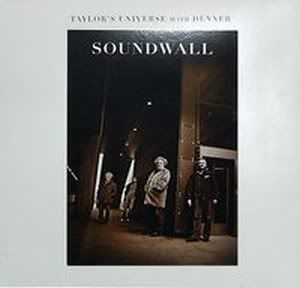
New arrival...Robin Taylor/Michael Denner - Soundwall


I'll likely have a more in depth review of this CD up in the usual location (for new readers, and especially as I've not included a link before, it's
Progscape - Where Progressive Rock Lives on the Web...I've been a primary reviewer there since June of 2006, contributing somewhere between 140 and 160 reviews in the past 2 years, along with newer staff writers Paulo André and Chris Piccirillo), but...

Today my copy of the new
Taylor's Universe album arrived, featuring Mercyful Fate/King Diamond guitarist Michael Denner as guest soloist throughout. Titled Soundwall, it is perhaps in some ways the most shocking Taylor's Universe album to date. Excising from a past review of one of his albums, I have this to say about his curriculum vitae:

"Taylor has released 23 albums since 1991, either solo, as part of the composed ensemble Taylor’s Universe, or as part of the free group Taylor’s Free Universe. His output covers a wide range of instrumental material…composed, melodic pieces, ambient textures and soundscapes, or completely improvised free music. The name on the label is generally a good indicator of what the contents will offer; albums released under Taylor’s name alone tend to lean toward ambiance and space, while albums under the Free Universe moniker will contain the most difficult and complex material."

Soundwall is neither ambient nor free music, though there are moments that perhaps allude to those styles. The pieces feel incredibly tightly composed, melodic without sounding cloying, intensely played. If past Taylor's Universe albums lean toward lighter, jazzier Canterbury bands at times, Soundwall instead looks to Lizard-era King Crimson and Dave Stewart's Egg for stylistic influences. There is every bit as much wild, unleashed playing as there is tightly reined in interplay that will keep the listener constantly actively listening. It's heavy without being ponderous, showing a side of the group's playing I'd not necessarily heard before.

I don't want to say any more than that, as I want the review to cover things more fully. But damn...this is good stuff. I'd even go so far as to say this is THE Taylor's Universe album to buy if you've never heard him before. Accessible without being simplistic, complex without wallowing in self-aware complexity for the sheer sake of doing so, this is an early front runner for my top 10 albums of 2008 list...

Read more about Robin Taylor
HERE.

Other Robin Taylor CD reviews:
On-Plugged in Elsinore
9 Eleven: Live at Copenhagen Jazzhouse
Family Shot
Experimental Health
Pork
Taylor's Universe
Certain Undiscoveries
Manipulated By Taylor
Once Again
Oyster’s Apprentice